Why I Time My Painting Sessions With a Visual Clock to Avoid Overworking
As an artist, my biggest challenge isn't "finding the muse"—it’s knowing when to put the brush down. It’s incredibly easy to get lost in a painting for six hours, losing all perspective and "overworking" the piece until the freshness is gone. I would often end a session feeling physically exhausted and creatively drained.
I finally found my creative balance by using a visual clock to structure my studio time.
Protecting the "Creative Pulse"
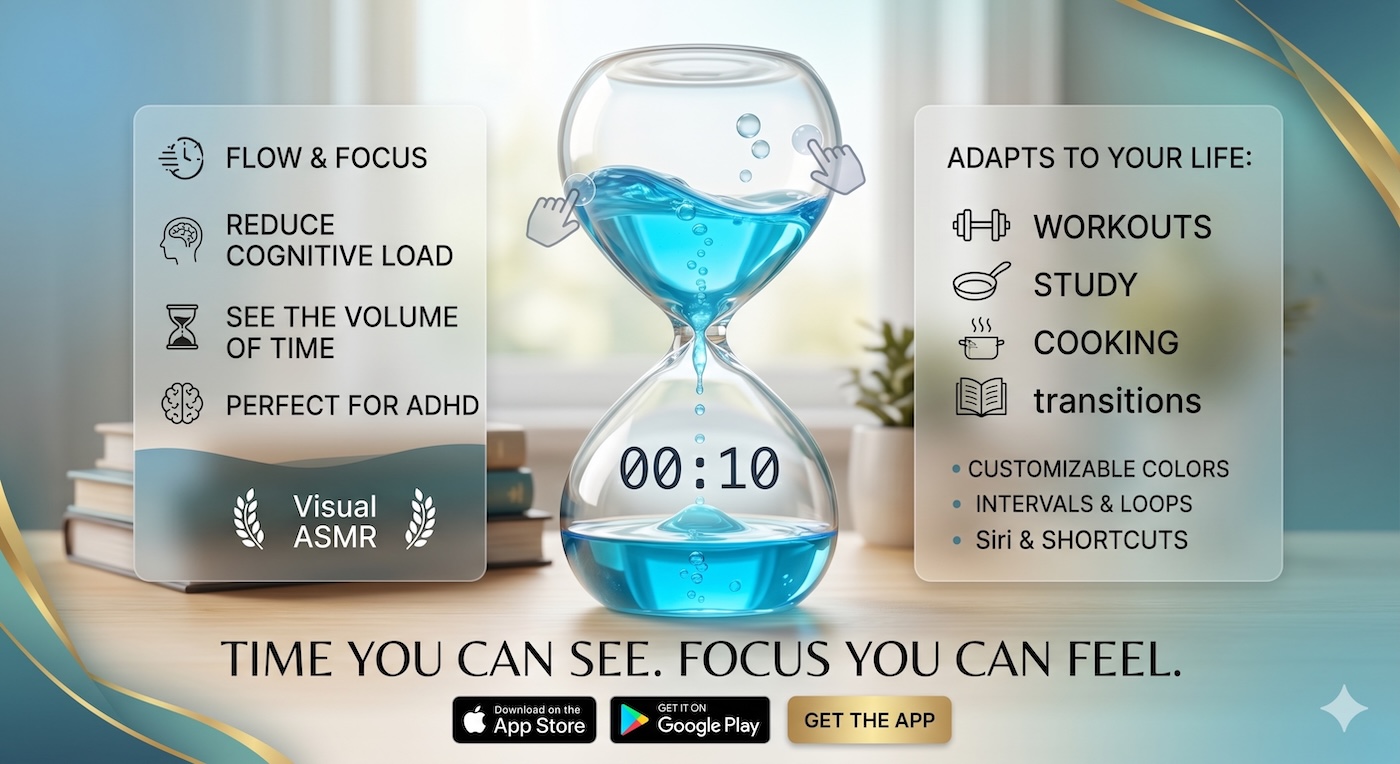
I now use 45-minute visual blocks for my painting sessions. Seeing the liquid slowly draining helps me stay present with the current "layer" or "section" I’m working on. It provides a steady rhythm that prevents me from rushing but also reminds me to keep moving.
The most important part is the "forced perspective" the timer provides. When the color is gone, I have to step away from the canvas for 10 minutes. This "eye reset" is vital for seeing mistakes and maintaining the overall vision of the piece.
Avoiding the "Muddy" Phase
Many paintings get "muddy" because the artist keeps working when they are tired. A visual timer acts as a guardrail for my energy. It ensures that I am always working with high-quality focus. By respecting the visual boundaries, I’ve found that my paintings have more life and my studio time is much more satisfying.
The Liquid Countdown: Your Studio Companion
Our Liquid Countdown Timer is the perfect companion for your creative practice. Its smooth, silent animation fits perfectly into a focused studio environment. it provides the clear visual feedback you need to protect your energy and master your craft.
Ready to find your creative rhythm? Visit visualcountdowntimer.com and set your first "Studio Sprint" today.