How I Taught My 4-Year-Old Time Management Without Numbers
At four years old, my daughter couldn't tell time. To her, "15 minutes" might as well have been "a hundred years." Numbers were just squiggles on a screen. Yet, we expect kids this age to manage their time—to get dressed, to finish eating, to share toys—without giving them a tool they can actually understand.
The breakthrough happened when I realized she didn't need to read numbers; she needed to see proportions.
Time as a Physical Quantity
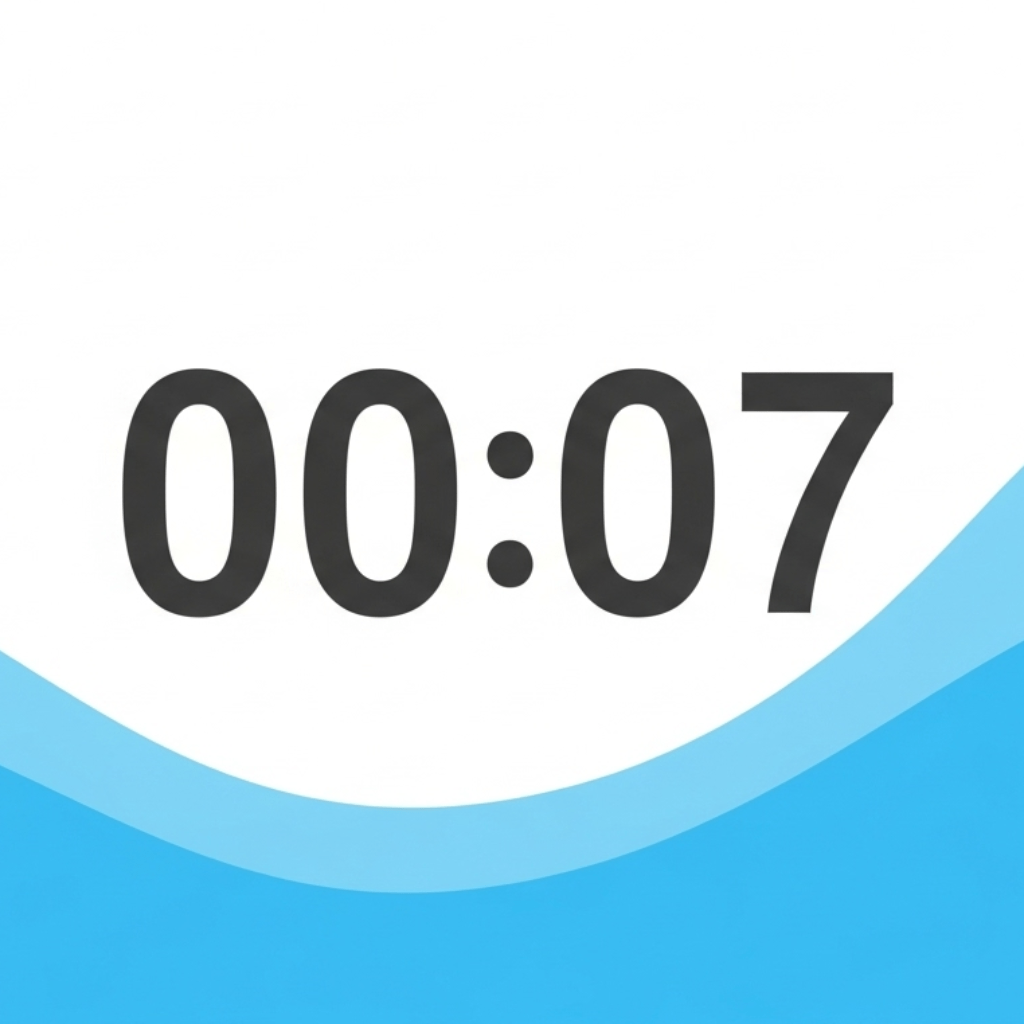
I started using a visual countdown timer for everything from toy cleanup to "wait time." Instead of saying "Wait two minutes," I would set a two-minute visual timer.
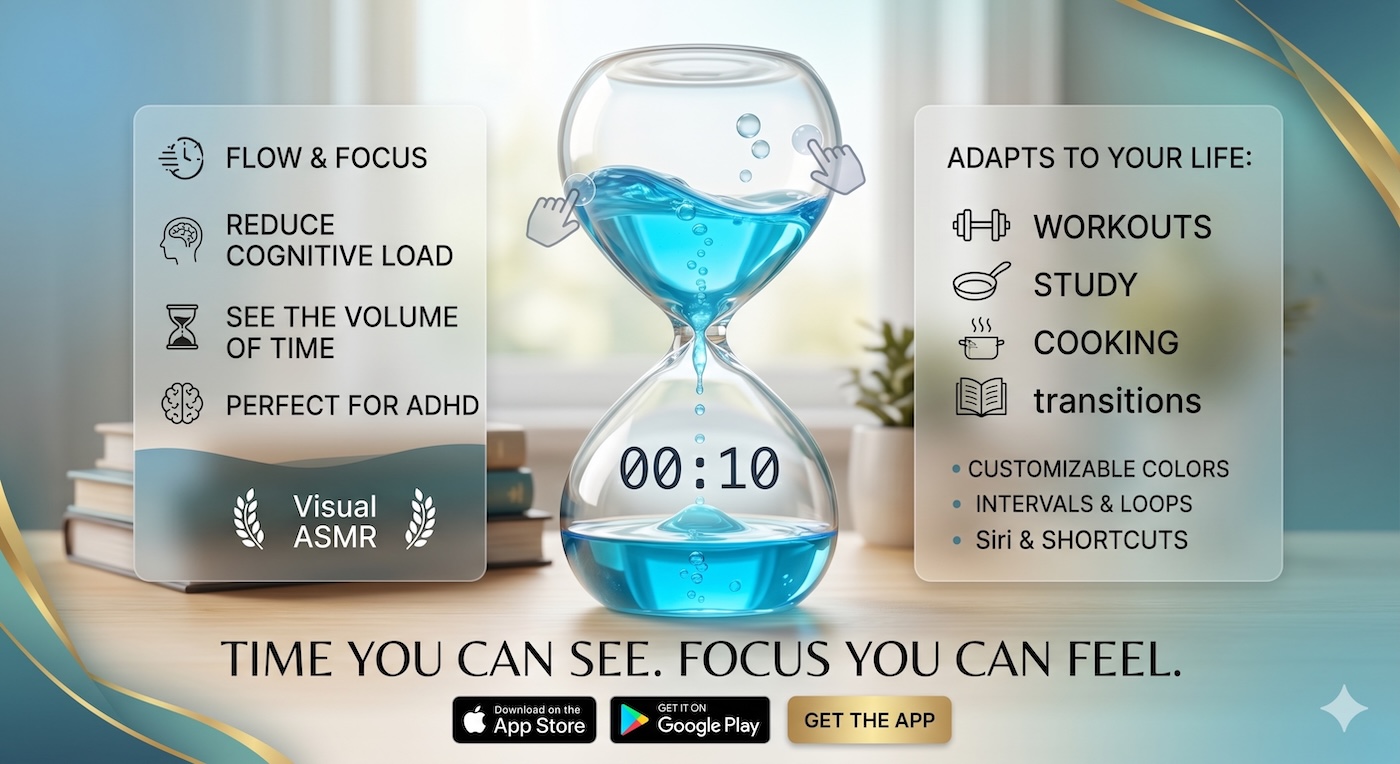
She could see the liquid draining. She understood that when the color was gone, the wait was over. She was learning the most fundamental concept of time management: that time is a resource that gets "used up."
Building Autonomy Through Visibility
Because she could see the time for herself, she didn't have to keep asking me, "Is it time yet?" This built her sense of autonomy and reduced my "mental load." She could glance at the screen and see: "I still have a lot of color left, I can keep playing," or "The color is almost gone, I should start putting my blocks away."
This is the beginning of executive function—the ability to plan and regulate one's own behavior relative to a goal.
The Liquid Countdown: The Perfect First Clock
Our Liquid Countdown Timer is the ideal "first clock" for preschoolers. It’s intuitive, colorful, and engaging. It removes the barrier of number literacy and allows children to interact with time on their own terms. It turns a complex abstract concept into a simple visual reality.
Start building your child's time management skills today. Visit visualcountdowntimer.com and let them see time for themselves.