How I Stopped Over-Engineering My Code With a Visual Timer Limit
As a developer, I love a "perfect" solution. I used to spend hours designing complex architectures and writing "future-proof" code for simple features. The result? I was always behind schedule, and my code was often more complicated than it needed to be. I was "over-engineering" myself into a corner.
I finally became a more efficient developer by using a visual timer to enforce a "Minimum Viable Solution" mindset.
The "Timebox to Done" Strategy
For every feature or bug fix, I set a visual timer for the "expected" duration. I tell myself: "I have to have a working solution by the time the liquid is gone."
Seeing the time as a physical quantity creates a "good urgency." It pushes me to focus on the core functionality rather than the "nice-to-have" abstractions. It reminds me that my job is to deliver value, not to write the world's most elegant class hierarchy. When I see the timer getting low, I stop "refactoring" and start "completing."
Embracing "Good Enough" Architecture
The visual countdown acts as a reality check. It reminds me that time is my most expensive resource. By respecting the visual boundaries, I’ve learned to write simpler, more maintainable code that gets the job done on time. My team is happier, and our velocity has doubled.
The Liquid Countdown: Your Engineering Guardrail
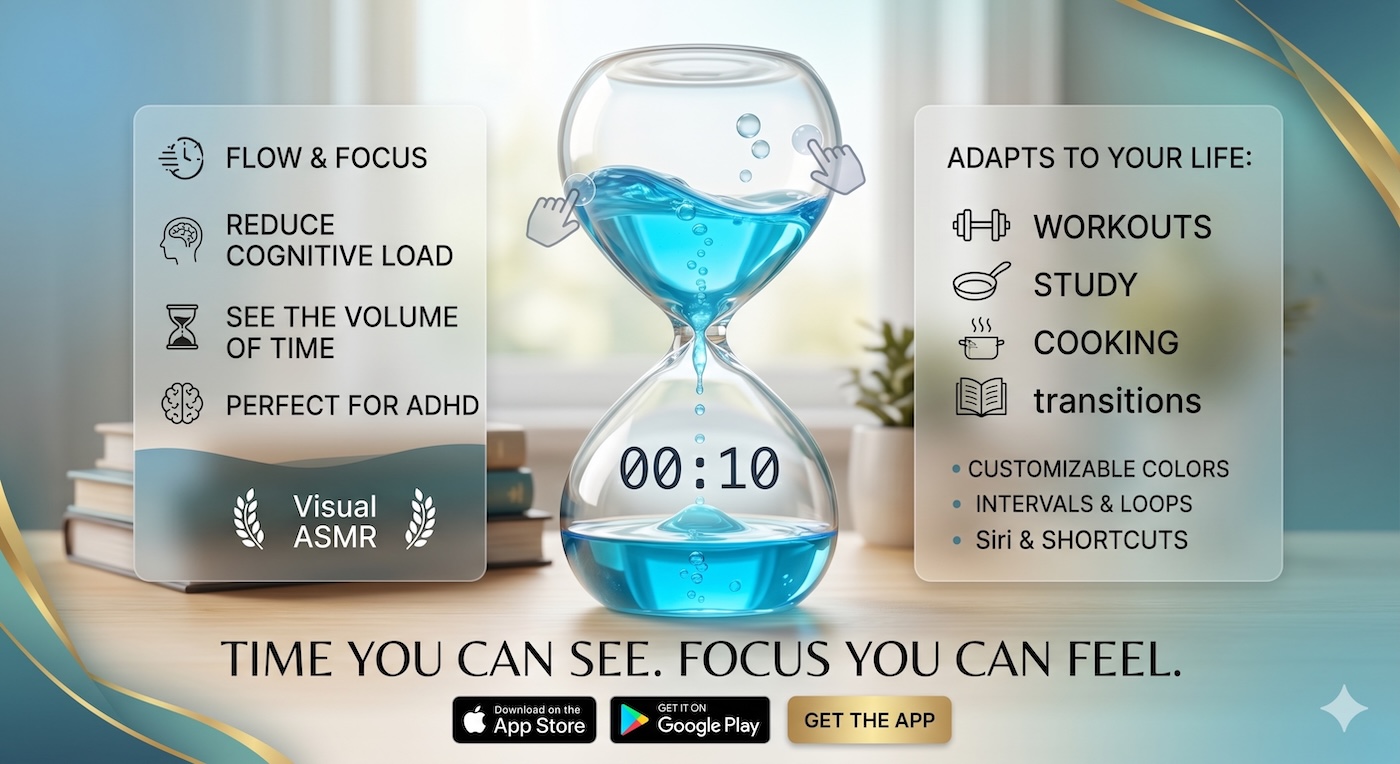
Our Liquid Countdown Timer is the ultimate tool for pragmatic developers. Its clear, smooth animation helps you stay focused on the goal and avoid the trap of over-engineering. It turns your development process into a focused, visual sprint.
Ready to deliver faster? Visit visualcountdowntimer.com and set your first "MVP Sprint" today.