How I Fixed My Circadian Rhythm By Limiting Evening Screen Time Visually
Your circadian rhythm—your body's internal clock—is incredibly sensitive to light and habit. For a long time, I struggled with "Revenge Bedtime Procrastination." I would stay up until 2:00 AM scrolling through my phone, even though I knew I would be exhausted the next day. The problem was that "midnight" felt abstract. I didn't have a clear boundary for when the "digital day" ended.
The fix was establishing a Visual Digital Sunset.
Creating a Hard Boundary for Blue Light
We know that blue light from screens suppresses melatonin, making it harder to fall asleep. But knowing that doesn't make it easier to stop.
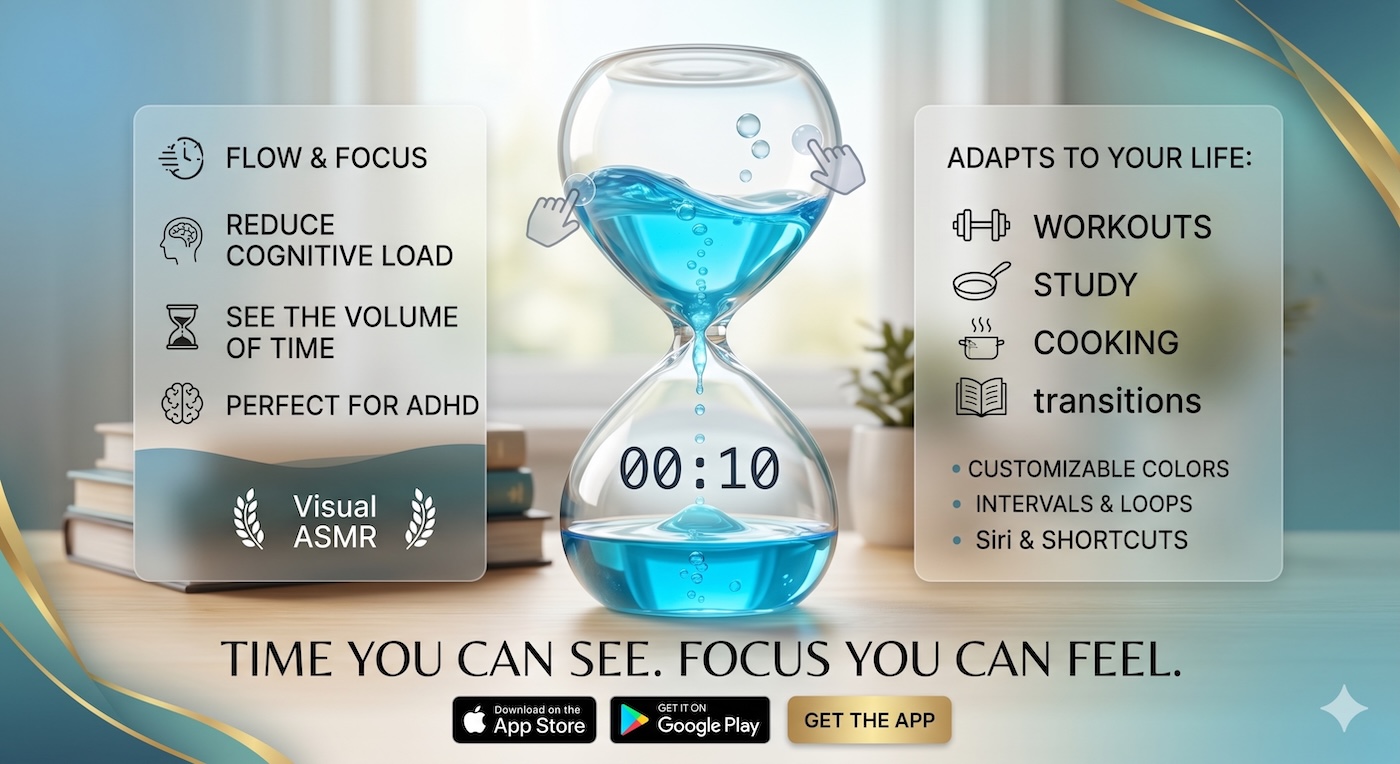
I started setting a 60-minute visual timer at 9:00 PM. This is my "Sunset Block." During these 60 minutes, I finish my last emails and social media checks. Seeing the liquid draining provides a physical reminder that my screen time is "running out." When the color is gone, the screens go off. No exceptions.
From "Checking" to "Winding Down"
The visual feedback helps my brain prepare for sleep long before I actually close my eyes. Instead of a sudden "stop" at 10:00 PM, I experience a 60-minute gradual fade-out. This reduces the "transition friction" that usually keeps me stuck on my phone.
By the time the timer finishes, my brain has already accepted that the day is over. This simple visual cue has helped me shift my bedtime by two hours and dramatically improved my sleep quality.
The Liquid Countdown: Your Sleep Anchor
Our Liquid Countdown Timer is the perfect tool for your evening routine. Its calming animation helps lower your arousal levels as you prepare for rest. It provides the clear, visual boundary you need to reclaim your sleep and restore your circadian rhythm.
Ready for a better night's sleep? Visit visualcountdowntimer.com and set your first "Digital Sunset" timer.