Spatial vs. Numerical Time: A Neurological Perspective
The human brain evolved to understand space long before it understood numbers. We are hardwired to process volume, distance, and quantity. Numerical time—the idea of hours and minutes—is a relatively new cultural invention that our brains still find somewhat abstract.
The Brain's Map of Time
Neuroscientists have found that we often map temporal concepts onto spatial ones. We talk about a "long" day or a "short" meeting. When we see time represented spatially (like a bar filling up or a liquid draining), it resonates with these deep-seated neurological pathways.
Why Visuals Win
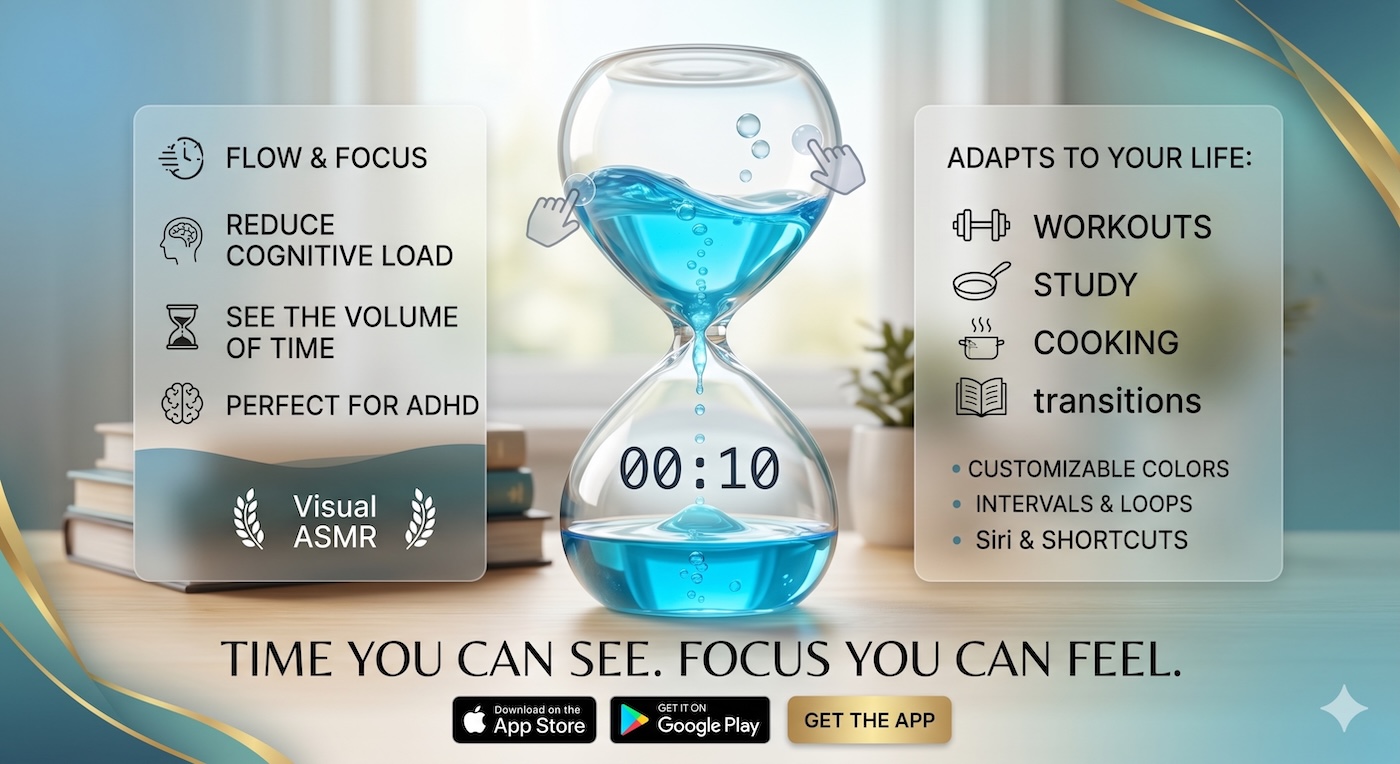
Visual timers leverage this spatial processing. Instead of forcing your brain to translate an abstract number into a sense of duration, a visual timer shows you that duration directly. It turns time into something you can "see" and "feel."
Visualize Your Success with Liquid Countdown Timer
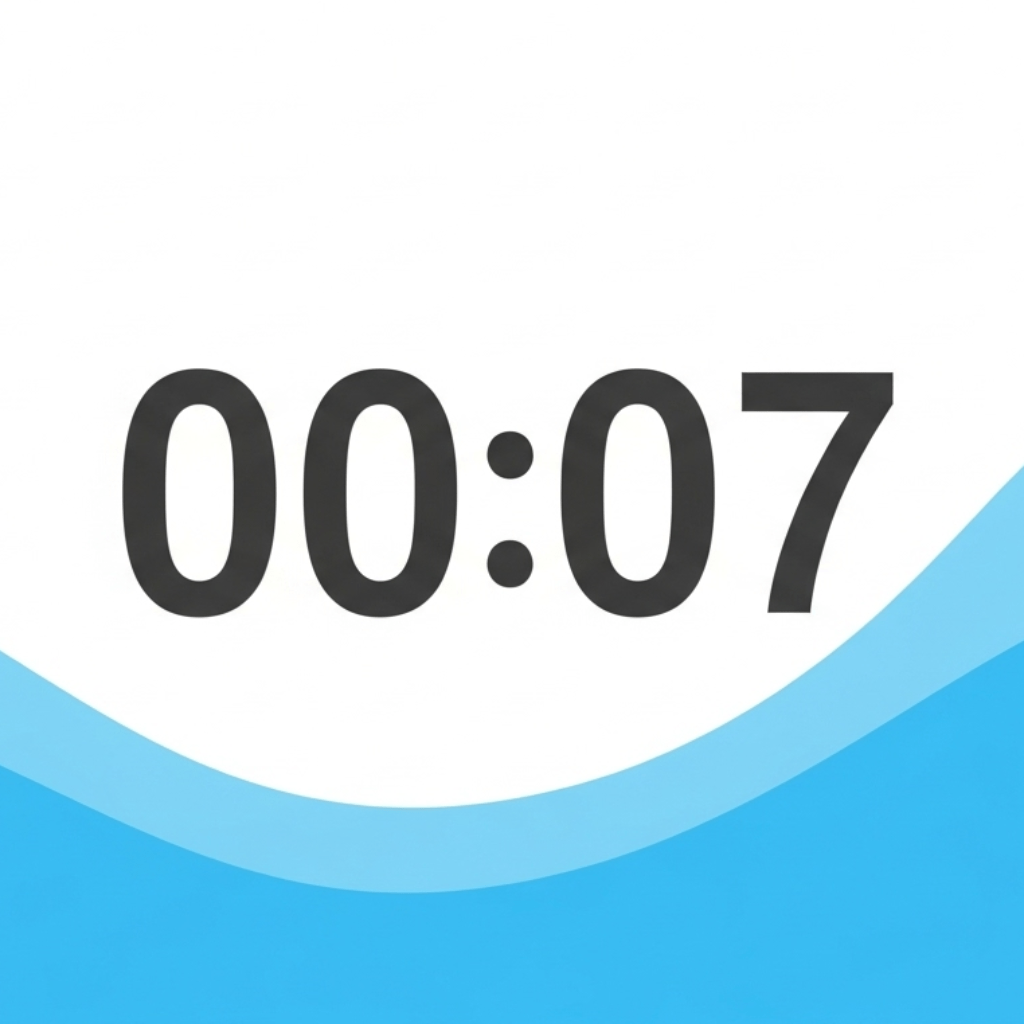
The Liquid Countdown Timer taps into this spatial understanding of time. By showing time as a fluid substance, it provides a more natural and intuitive way to monitor your progress. It's not just a clock; it's a spatial representation of your goals.
Experience the power of spatial timing on our homepage.